Introduction
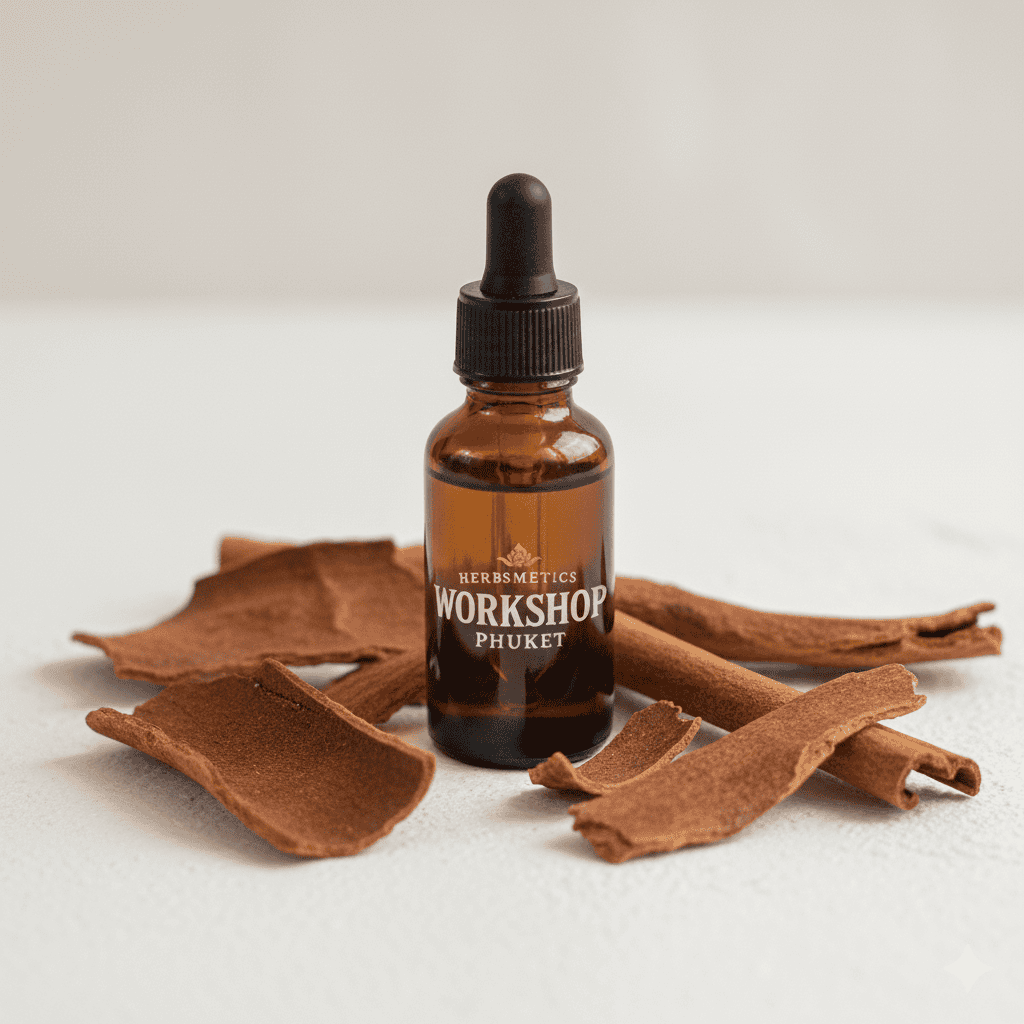
Cassia essential oil, distilled from the bark of the
Cinnamomum cassia tree, is a
spicy, warm, and intensely aromatic oil closely related to cinnamon. Known since ancient times in Chinese and Ayurvedic medicine, cassia has been prized for its
stimulating, protective, and comforting qualities . Its aroma is richer, hotter, and more pungent than true cinnamon (
Cinnamomum verum ), making it both powerful and distinctive in perfumery and wellness. At Herbsmetics, we introduce Cassia oil in our
Perfume & Aromatherapy Workshops in Phuket , where guests explore its bold, exotic spice character and learn how even a drop can transform a blend.
Aroma Profile
- Top Notes : Sharp, hot, spicy-sweet, intensely warming.
- Heart Notes : Rich cinnamon bark, resinous, with clove-like depth.
- Base Nuance : Long-lasting, warm, dry spice with a hint of sweetness.
Cassia is
hotter and more forceful than true cinnamon oil, demanding careful, sparing use in blends.
Origins & Cultural Heritage
Cassia (
Cinnamomum cassia ) has been used for millennia:
- Chinese Tradition : Known as rou gui , used in Traditional Chinese Medicine for circulation, warmth, and vitality.
- Ayurveda : Valued for digestive stimulation and warming the body.
- Biblical & Middle Eastern Heritage : Mentioned in ancient texts as a precious spice and perfume ingredient.
- Symbolism : Represents warmth, protection, and abundance .
Production & Extraction
Cassia essential oil is obtained by
steam distillation of the bark and twigs .
- Method : Yields a strong, hot oil rich in cinnamaldehyde (responsible for its fiery aroma).
- Quality : Deep reddish-brown, highly potent, must be diluted before use.
- Distinctiveness : More pungent, less sweet than cinnamon leaf or bark oil.
Benefits & Unique Advantages
- Stimulating & Energizing : Boosts circulation and mental alertness.
- Protective : Traditionally used against infections and as an immune support.
- Warming : Comforting for cold, fatigue, and low energy.
- Perfumery Role : Adds a hot, spicy heart note with strong projection.
- Wellness : Invokes warmth, courage, and grounding.
Workshop Relevance
In the
Herbsmetics Perfume & Aromatherapy Workshops in Phuket , Cassia oil is presented as a
powerful spice note :
- Guests learn that a drop is enough — it dominates easily.
- Works well in exotic blends with orange, clove, or patchouli.
- Demonstrates how spice oils transform perfumes with heat, drama, and intensity.
Cassia teaches participants the importance of
balance and restraint in natural perfumery .
Example Uses
- Perfumery : Blend sparingly with citrus (orange, mandarin) or resins (frankincense, myrrh) for oriental perfumes.
- Diffuser : Add 1–2 drops with sweet orange or clove for festive, warming blends.
- Massage Oils : Highly diluted (very low %) for warming and circulation blends.
- Skincare : Rarely used directly — too hot for sensitive skin. Best in diluted aromatic oils.
- Wellness Rituals : Use in protective blends to create a sense of safety and abundance.
Safety Note
Cassia essential oil is a
dermal irritant and sensitizer . Always dilute heavily (well under 0.5% for topical use) and avoid use on sensitive skin, children, or during pregnancy.
- Why Choose Herbsmetics Cassia Oil?Authentic cassia bark oil , distilled for richness and potency.
- Bold, spicy intensity — a drop transforms the entire blend .
- Deeply tied to Asian traditions and ancient perfumery heritage .
- Featured in our Phuket workshops, where guests discover its fiery spice and dramatic perfumery role .
👉 Perfect for those who want to add
warmth, spice, and exotic depth to perfumes or aromatherapy — but always with care and respect for its potency.